

How Scents Define Destinations Across Cultures
The Aromatic History of Travel. When you think about the places you have travelled to, chances are you don’t just remember the sights you remember the smells.
What Is Travel-Inspired Home Fragrance?
Travel-inspired home fragrance captures the scents of real destinations.
It allows you to recreate places like Tokyo, Istanbul, or the Maldives at home.
For example, floral notes may reflect tropical islands. Meanwhile, spices can recreate bustling markets. As a result, scent becomes a way to relive travel memories every day.
The heady aroma of incense in a Buddhist temple, the zesty burst of orange blossoms on a Mediterranean breeze, or the warm, earthy scent of spices in bustling Turkish bazaars. Scent has the unique ability to transport us through time and space, allowing us to relive moments from our adventures with just one whiff.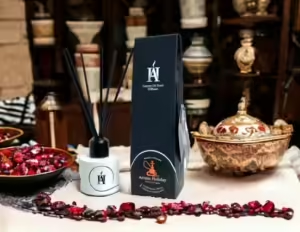
At www.AromaHoliday.com, we believe that every destination has its own story to tell through scent. But this connection between place and aroma isn’t new. Across history, cultures have been defined by their unique scents, making fragrance a vital part of travel and identity.
Key Takeaways
- Scent connects strongly to memory and emotion
- Different destinations have signature fragrance profiles
- Markets, temples, and nature shape scent experiences
- Home fragrance allows you to relive travel moments
- AromaHoliday transforms destinations into scent
Ancient Journeys and the Allure of Fragrance
Long before modern tourism, people used scent to understand the world. For instance, Ancient Egypt valued incense made from frankincense and myrrh. Traders carried these scents across vast caravan routes.
Eventually, they reached places like Greece and India. Importantly, these fragrances did more than trade value. They represented distant cultures and inspired curiosity. Similarly, the Silk Road carried more than goods. It carried aroma across continents.
Warm spices like cinnamon and clove filled the air. As a result, travellers recognised regions through scent alone. They could close their eyes and identify their location instantly.
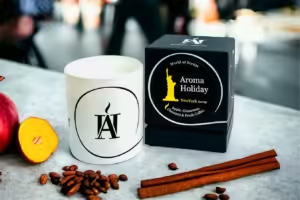
Scents of Sacred Spaces
Many iconic scents come from spiritual traditions.
For example, temples in Southeast Asia use sandalwood. Meanwhile, European churches burn frankincense during ceremonies.
These scents create atmosphere and meaning. Over time, these aromas became symbols of place. Therefore, travellers now associate them with peace and reflection. Even today, these scents trigger feelings of calm and connection.
The Marketplace: A Melting Pot of Aromas
No travel experience is complete without a visit to a local market, where the air is thick with the aromas of fresh produce, street food, and spices. Picture the fragrant chaos of Marrakech, where the sweetness of dried figs mingles with the sharp tang of cumin and paprika. Or the aromatic pull of Istanbul’s Grand Bazaar, where Turkish coffee and rosewater draw you deeper into its labyrinth.
These scents define entire regions, acting as sensory postcards that linger in a traveller’s memory.
Modern Travel and the Quest for Scent
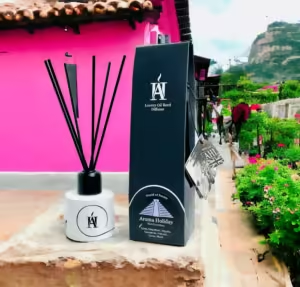 In today’s world, travel is as much about the sensory experience as it is about the destination. From lavender fields in Provence to cherry blossoms in Japan, many people plan their trips around the scents they want to experience.
And for those who can’t travel, products like AromaHolidays destination-inspired candles are helping bring these aromas into homes. Each candle is designed to capture the essence of a place be it the salty breeze of a coastal escape, the woody warmth of a mountain retreat, or the floral abundance of a tropical paradise.
Why Scents Define Destinations
Fragrances have a way of embedding themselves in our memories, more deeply than sights or sounds. The brain’s olfactory system (responsible for smell) is directly linked to the limbic system, which governs emotions and memory. A single whiff of jasmine can bring you back to a moonlit stroll in Bali, while the scent of cedarwood can remind you of hiking through alpine forests.
At www.AromaHoliday.com, we’ve embraced this connection between scent and travel, creating candles that let you relive your adventures or the dream of your next one.
Travel Through Your Senses
Whether you are reminiscing about past travels or dreaming of future adventures, scent is your passport to the world. Next time you light a candle from AromaHoliday, close your eyes, take a deep breath, and let it transport you. Because every destination has a story and every story has a scent.
Research into scent and memory is often linked to the brain’s limbic system, which controls emotion and recall.
Frequently Asked Questions:
Why does scent trigger travel memories? Scent links directly to the brain’s memory centre. As a result, it creates strong emotional recall.
What scents represent different destinations? For example, citrus suits Italy, while spices reflect Turkey. Meanwhile, florals often represent tropical locations.
Can home fragrance really recreate a place? Yes, it can recreate the emotional experience of a destination. However, the effect depends on scent accuracy and quality.
